Casting and Moulding Apprenticeship
A Casting and Moulding Apprenticeship is a paid, nationally accredited training pathway that prepares you for a career in metal casting, mould making and pattern fabrication.
Apprentices spend four years learning to work with molten metals, sand moulds and modern manufacturing technologies while completing the MEM31719 Certificate III in Engineering – Casting and Moulding Trade.
Casting and moulding tradespeople, including patternmakers, moulders and core makers, work with metals like steel, aluminium and bronze to create moulds and casts for components ranging from small precision fittings to the structural frames of large industrial machinery.
It's a hands-on fabrication trade with strong industry demand across mining, construction and manufacturing, particularly for the production of bespoke and heavy-duty components.
What Does a Caster or Moulder Do?
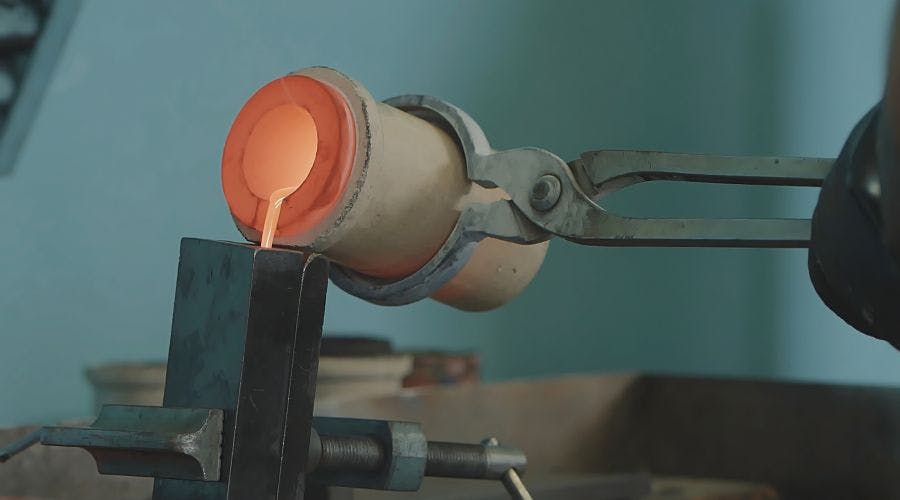
Casters and moulders work in foundry and fabrication environments, often around hot processes, dealing with molten metals such as steel, aluminium and bronze. The trade combines traditional sand moulding craft with modern manufacturing technologies including CNC machining, computer-aided design (CAD) and 3D printing.
Workers create ferrous and non-ferrous castings used to produce a wide range of products, including marine components like rudders, skegs, propellers and stern tubes, as well as couplings, deck hardware, hatches, bespoke furniture and industrial machine parts. Common equipment includes induction furnaces, grinders and guillotines.
A typical day in casting and moulding can include:
- Liaising with patternmakers and metallurgists on casting designs
- Performing engineering measurements and computing tasks using CNC, CAD and 3D printing technology
- Preparing moulding boxes according to pattern requirements and creating sand moulded castings
- Injecting molten metal into moulds and dies by hand or machine
- Operating a range of tools, machinery and hand-made processes to create moulds and casts
- Identifying casting defects and implementing methods to eliminate them
- Inspecting finished castings for quality and dimensional accuracy
How Long is a Casting and Moulding Apprenticeship?
A casting and moulding apprenticeship typically takes four years to complete.
You'll work and earn while learning the trade on the job under qualified casters and moulders, alongside studying for your MEM31719 Certificate III in Engineering – Casting and Moulding Trade at TAFE or a Registered Training Organisation.
The qualification sits within the Manufacturing and Engineering training package, which also covers related fabrication trades like Boilermaking, Fabrication, and Sheetmetal.
Casting and Moulding Salary
Qualified casting and moulding tradespeople in Australia can earn competitive wages, with higher salaries commonly available in mining, foundry, manufacturing and heavy industrial environments. Earnings vary depending on experience, location and the type of specialist work performed.
Casting and Moulding Apprentice Wages
As a casting and moulding apprentice, you'll usually be paid under the Manufacturing and Associated Industries and Occupations Award or an EBA provided by your employer. Apprentice wages increase progressively throughout your training as your skills and responsibilities develop.
Your weekly pay may vary depending on factors such as whether you've completed Year 12, whether you're an adult apprentice, any EBA conditions, employer or host benefits, and relevant government support.
Indicative weekly Award wages for a casting and moulding apprentice as at 1 July 2026, ranging from stage 1 (year 1) to stage 4 (year 4):
- Junior apprentice, did not complete Year 12: $559.55 to $984.81 per week
- Junior apprentice, completed Year 12: $615.51 to $1,029.10 per week
- Adult apprentice (21 years and over): $895.28 to $1,029.10 per week
(Source: Fair Work Ombudsman Pay Guide MA000010)
These minimum Award rates apply to manufacturing apprenticeships under general industry conditions. Depending on the employer and worksite, additional payments such as shift penalties, overtime or industry allowances may also apply. Read more in our 2026-27 Apprentice Wages Guide.
Skills and Requirements
A casting and moulding apprenticeship is a hands-on trade that rewards a particular combination of attributes:
- Mechanical aptitude: An interest in tools, machinery and how mechanical systems work, with any prior experience highly regarded
- Comfort with hot environments: Foundry and blast furnace work means standing the heat, both literally and figuratively, while staying safety-focused
- Physical dexterity: Working with moulds and castings demands manual precision, and the work can be physically demanding with extended standing and lifting
- Attention to detail: Finished castings must meet exact specifications, so close inspection and quality control are part of every job
- Creativity: Many casting and moulding projects require innovative thinking to solve complex problems or achieve unique results
- Safety consciousness: Working with molten metals and high-temperature equipment requires strict adherence to safety protocols
Career Pathways After Your Apprenticeship
A casting and moulding qualification opens doors across heavy industry and specialist manufacturing, including:
- Foundry and metal casting
- Patternmaking and core making
- Marine component fabrication
- Mining and resources
- Heavy industrial manufacturing
- Bespoke and custom metalwork
- CAD, CNC and 3D printing-based casting design
- Quality assurance and metallurgical inspection (with further study)
- Site supervision, project management and contracting
- Self-employment as a foundry operator or specialist contractor
Qualifying is the start, not the finish. Most casters and moulders keep learning throughout their career, picking up specialised skills and certifications that match the work they want to do.
Find a Casting and Moulding Apprenticeship
If a casting and moulding apprenticeship is the right fit, MIGAS can match you with the right placement and support you through your training. Browse the MIGAS Jobs Board for current roles, or register with us to receive updates when new positions are added.
Latest Apprenticeships
Quick Links
A casting and moulding apprenticeship is a specialisation within fabrication trade engineering.
You might also consider a Boilermaker Apprenticeship or Sheetmetal Apprenticeship.
View the MIGAS Jobs Board to view current engineering trade apprenticeships.