Plumbing Apprenticeship
A Plumbing Apprenticeship is a paid, nationally accredited training pathway that prepares you to install, repair and maintain piping systems across residential, commercial and industrial buildings.
Apprentices train for four years on the job while completing a qualification such as the CPC32420 Certificate III in Plumbing.
Plumbers traditionally work on systems that handle water distribution and waste management, but the trade now also covers gas, fire protection, irrigation, hydronic heating and chemical systems. Demand is consistently strong across construction, infrastructure, commercial fit-out and ongoing maintenance.
It's a hands-on trade with strong wages, broad industry application, and one of the clearest pathways to running your own business of any of the construction trades.
What Does a Plumber Do?
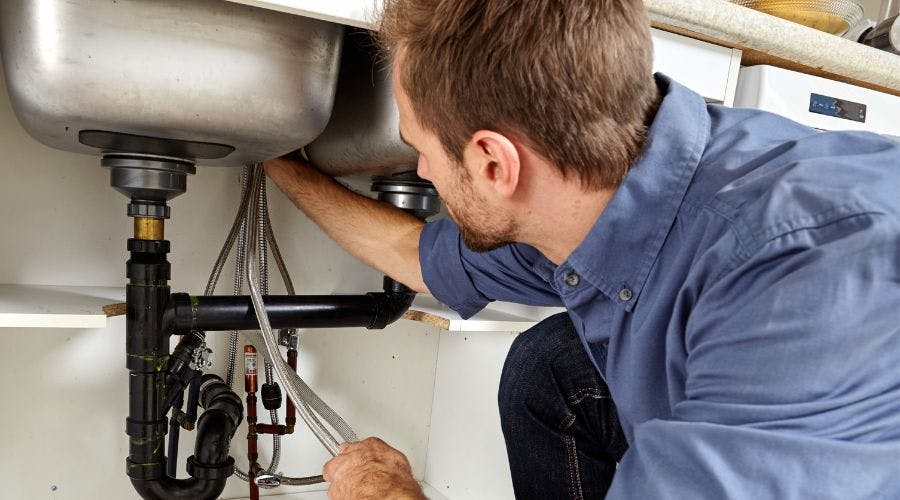
A plumber is a skilled tradesperson who installs, repairs and maintains plumbing systems. These systems include the pipes, fixtures, valves, drains and other components responsible for supplying water, gas or sewage to residential, commercial and industrial buildings.
Plumbers play a vital role in keeping plumbing systems running properly, maintaining health and sanitation standards, and supporting the efficient use of water resources.
There are six main specialisations within plumbing, and depending on your host employer, your training will see you focus on one or more of:
- Water supply plumbing: Installing, repairing and servicing hot and cold water systems
- Sanitary plumbing: Installing suspended drains, waste pipes and bathroom fixtures including toilets and basins
- Roof plumbing: Fabricating and installing metal roofing, gutters, downpipes and rainwater systems
- Drainage plumbing: Clearing and repairing underground drains and stormwater systems
- Gas fitting: Installing and testing gas lines for heaters, hot water services and appliances
- Mechanical services: Installing hydronic heating, ducted heating, evaporative coolers and split-system air conditioning
Day-to-day tasks vary depending on the specialisation, but commonly include reading plans, cutting and joining pipes, installing fixtures, testing systems for compliance, diagnosing faults and working with both copper and modern composite materials.
How Long is a Plumbing Apprenticeship?
A plumbing apprenticeship typically takes four years to complete.
You'll be paid to work and gain hands-on experience under qualified plumbers, alongside studying for a nationally accredited qualification at TAFE or a Registered Training Organisation.
Common qualifications include:
- CPC32420 Certificate III in Plumbing
- CPC32620 Certificate III in Roof Plumbing
- CPC32720 Certificate III in Gas Fitting
- CPC32820 Certificate III in Fire Protection
Completing the apprenticeship qualifies you to apply for a plumbing licence, which is issued by your state or territory regulator and is legally required to perform plumbing work in Australia. Additional licensing endorsements are required for specific specialisations like gas fitting, drainage and roofing.
Plumber Salary
A qualified plumber in Australia in 2026 typically earns between $85,000 and $105,000 per year, with higher salaries available depending on specialisation and industry. (Seek)
As a Plumbing Apprentice, you'll typically be paid under the Plumbing and Fire Sprinklers Award or an EBA provided by your employer. Apprentice wages step up each year of your apprenticeship. Your weekly pay depends on whether you've completed Year 12, whether you're an adult apprentice, any EBA terms, employer or host benefits, and any government support you're eligible for.
Indicative weekly Award wages for a plumbing apprentice as at 1 July 2025, ranging from 1st year (lowest) to 4th year (highest):
- Junior apprentice, did not complete Year 12: $601.24 to $1,050.60 per week
- Junior apprentice, completed Year 12: $657.41 to $1,050.60 per week
- Adult apprentice (21 years and over): $987.53 to $1,050.60 per week
(Source: Fair Work Ombudsman Pay Guide MA000036) Rates apply to plumbing and mechanical services apprentices and reflect minimum Award wages. Allowances may apply on top of these rates depending on classification and circumstances. Separate rates apply to sprinkler pipe-fitting apprentices and trainee apprentices.
Skills and Requirements
Plumbing rewards a particular blend of technical skill, problem-solving and customer focus. Successful apprentices share these attributes:
- Practical skills: A genuine enjoyment of hands-on, manual work, often in tight spaces, outdoors and in varied conditions
- Problem-solving skills: Diagnosing faults in pipework, drainage and gas systems calls for analytical thinking and a methodical approach
- Spatial awareness: Visualising how pipework runs through walls, ceilings and floors is essential for installation work
- Attention to detail: Precision matters. Small leaks or faults can cause significant damage and safety issues
- Communication skills: You'll often deal directly with customers, so being able to explain technical issues and costs clearly is part of the job
- Physical fitness: The job involves lifting, kneeling, working in confined spaces and standing for long periods
Career Pathways After Your Apprenticeship
A plumbing qualification opens doors across construction and beyond, including:
- Residential, commercial and industrial plumbing
- Gas fitting and gas appliance installation
- Roof plumbing and rainwater systems
- Mechanical services (HVAC, hydronics, refrigeration adjacent work)
- Fire protection and sprinkler systems
- Drainage and civil plumbing
- Hospital, laboratory and specialist plumbing
- Estimating, project management and site supervision
- Becoming a licensed plumber and starting your own business
- Plumbing inspection and compliance roles
Plumbing has one of the clearest pathways to self-employment of any trade. Many qualified plumbers go on to start their own businesses within a few years of completing their apprenticeship.
Find a Plumbing Apprenticeship
For Plumbing Apprenticeships and other construction trade opportunities, visit the MIGAS Jobs Board. You can also register with us to receive updates when new positions are added.