GTOs Step in to Bridge the Budget Gap
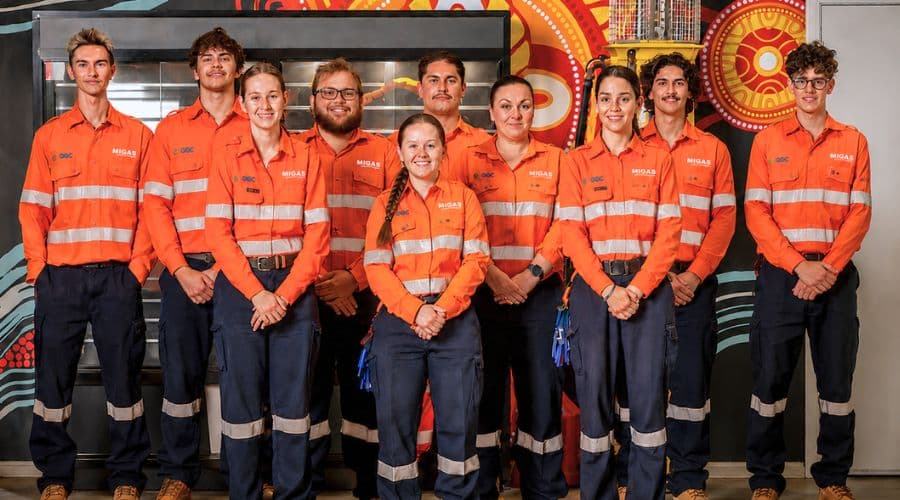
MIGAS apprentices and trainees hosted with Shell's QGC business in the Western Downs.
From 1 January 2027, the Australian Government is making the Australian Apprenticeships Incentive System more targeted.
Employers with 200 or more staff will generally no longer be eligible for employer incentive payments. For organisations of that size, the direct subsidies that have helped support apprentice and trainee intakes will no longer be available.
There is an important exception. Group Training Organisations remain eligible regardless of size, which gives large employers a route to keep accessing a supported apprenticeship model.
Why This Matters for Large Employers
HR, workforce planning, and training teams understand that apprenticeships are an investment that come with cost, compliance and complexity. While there’s certainly a return on that investment in terms of developing a skilled workforce pipeline, government subsidies help employers offset the cost of apprenticeships.
For large employers, the answer may be to work with a Group Training Organisation (GTO) like MIGAS Apprentices & Trainees.
A GTO employs the apprentice or trainee and places them with a host employer for on-the-job experience. This model reduces the administrative load on the host employer while still giving the business access to emerging talent, structured training pathways and workforce development support.
Under the announced changes, GTOs remain recognised within the incentive system. That means large employers who host apprentices through a GTO may still be able to access the benefits of a supported apprenticeship model, without needing to directly manage every part of the employment, claims and compliance process themselves.
Eligibility will depend on the occupation, commencement timing, program settings and government rules in place at the time.
The Challenge is Not Just Incentives
Incentives are useful, but they are only one part of a successful apprenticeship program.
For large employers, the bigger challenge is often operational:
- How do you recruit the right candidates across different locations?
- How do you manage supervision, training plans, rotations and RTO coordination?
- How do you keep apprentices engaged through the early stages of their trade?
- How do you stay compliant across awards, training contracts, probation periods, wage progression, safety obligations and state-based requirements?
- How do you administer incentives correctly without creating avoidable risk?
These questions become more complex when a workforce is spread across multiple sites, business units, states or project locations.
That is where MIGAS can be particularly helpful.
A Simpler Way to Manage Apprenticeship Programs
MIGAS Apprentices & Trainees is a GTO with a multi-state footprint and long-standing experience supporting employers with apprenticeship and traineeship programs.
For large employers, MIGAS can help bring structure and consistency to apprenticeship delivery across multiple worksites. That includes support with recruitment, onboarding, employment administration, training coordination, field support, apprentice mentoring and incentive management.
The value is in having a partner who understands the apprenticeship system and can help employers avoid the common friction points that lead to poor completion rates, inconsistent supervision or compliance issues.
For organisations with dispersed teams, this can be the difference between having a collection of individual apprentices and having a genuine workforce development program.
Navigating Compliance With Confidence
Apprenticeships sit at the intersection of employment law, vocational training, workplace supervision and government funding. For large employers, that can create complexity that internal HR or training teams may not have the time or specialist knowledge to manage at scale.
MIGAS supports employers to navigate this environment, including the practical administration of apprenticeship arrangements and government incentives where eligible.
That matters because incentive claims are not just a paperwork exercise. They depend on correct commencements, eligible occupations, training arrangements, employment status and ongoing compliance with program requirements.
Getting it right helps protect the employer, the apprentice and the integrity of the program.
The Opportunity for Large Employers
The Federal Budget changes do not reduce the need for skilled workers. If anything, they sharpen the need for employers to think carefully about how apprenticeship programs are designed, funded and supported.
For large employers, partnering with a GTO may become an even more important part of workforce planning.
It can help organisations continue to invest in apprenticeships while reducing administrative burden, improving consistency across sites and maintaining access to specialist support.
Plan Your Apprenticeship Program With MIGAS
With the incentive changes taking effect from 1 January 2027, now is a good time to look at how a GTO arrangement could support your apprenticeship program.
MIGAS works with host employers across Queensland, New South Wales, Western Australia, Victoria and South Australia. Contact our team to discuss your workforce plans and what the changes mean for your business.