Fitter Machinist Apprenticeship
A Fitter Machinist Apprenticeship is a paid, nationally recognised training pathway where you learn precision machining, fabrication, assembly and maintenance of mechanical equipment over approximately four years.
Apprentices gain hands-on experience operating machine tools and CNC equipment while completing the MEM30219 Certificate III in Engineering – Mechanical Trade.
Fitter machinists play a vital role in the manufacturing and maintenance of machinery and mechanical systems. Their work keeps industries running safely and efficiently, and qualified fitter machinists are consistently in demand at manufacturing facilities, machine shops, mining sites and engineering workshops.
For people who enjoy working with their hands and have a passion for mechanical systems, it's a trade that rewards precision, problem-solving and patience.
What Does a Fitter Machinist Do?
A fitter machinist, often referred to simply as a machinist or fitter, is a skilled tradesperson who specialises in the fabrication, maintenance and repair of machinery and mechanical equipment. The role spans a number of industries, including manufacturing, aerospace, defence, mining and automotive.
Key responsibilities can include:
Machining: Fitter machinists use machine tools and precision instruments to cut, shape and finish metal and other materials to exact specifications. This includes setting up and operating lathes, milling machines, grinders and drilling machines to produce parts and components. Many also work with computer numerical control (CNC) machines, which are automated tools controlled by computer programs.
Measurement and inspection: Using precision tools such as callipers, micrometers and gauges, fitter machinists ensure parts meet the required tolerances and specifications. The role demands strong skills in reading and interpreting technical drawings, blueprints and engineering specifications.
Assembly: Fitter machinists assemble components into larger mechanical systems or machines, fitting, aligning and adjusting parts to make sure everything functions as designed.
Maintenance and repair: A significant part of the job involves keeping existing machinery running. This means troubleshooting faults, identifying worn or damaged parts, and carrying out repairs or replacements to get equipment back online.
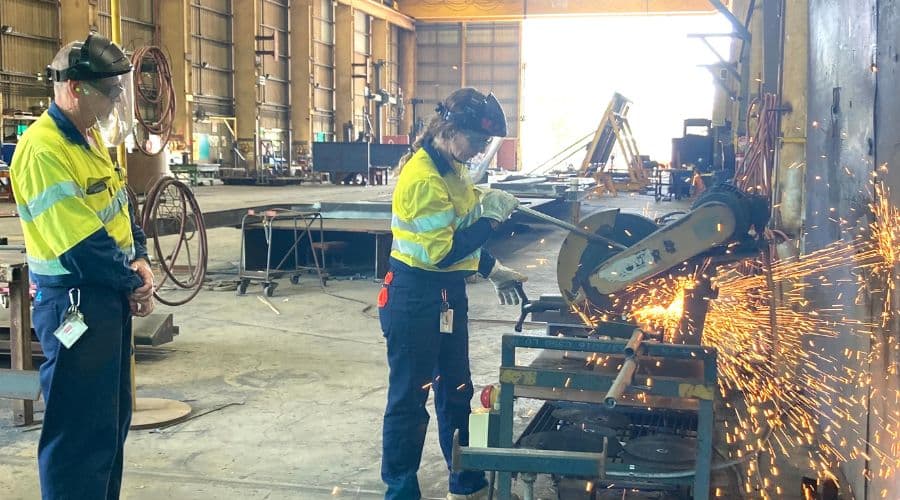
MIGAS Fitter Machinist Apprentice learning the trade on-the-job.
How Long is a Fitter Machinist Apprenticeship?
A fitter machinist apprenticeship takes around four years to complete, in line with similar engineering trade pathways.
While you train, you'll receive a wage and develop hands-on skills in a real work environment, while studying for your MEM30219 Certificate III in Engineering – Mechanical Trade at TAFE or a Registered Training Organisation.
Apprenticeship completion is competency-based, meaning it's tied to demonstrating the required skills and knowledge rather than time served alone.
Fitter Machinist Salary
In 2026, qualified fitter machinists in Australia typically earn between $80,000 and $90,000 per year, with higher salaries available in mining, heavy manufacturing and precision engineering industries. (Seek)
Fitter Machinist Apprentice Wages
As a fitter machinist apprentice, you'll generally be paid under the Manufacturing and Associated Industries and Occupations Award or an EBA provided by your employer. Apprentice wages increase as you progress through the different stages of your training.
Your actual pay can vary depending on factors such as whether you've completed Year 12, whether you're an adult apprentice, any enterprise agreement conditions, employer or host benefits, and relevant government support.
Indicative weekly Award wages for a fitter machinist apprentice as at 1 July 2026, ranging from stage 1 (year 1) to stage 4 (year 4):
- Junior apprentice, did not complete Year 12: $559.55 to $984.81 per week
- Junior apprentice, completed Year 12: $615.51 to $1,029.10 per week
- Adult apprentice (21 years and over): $895.28 to $1,029.10 per week
(Source: Fair Work Ombudsman Pay Guide MA000010)
These pay rates are based on minimum Award conditions for manufacturing apprenticeships. Depending on the employer and worksite, apprentices may also receive additional allowances, overtime rates or site-based payments. Read more in our 2026-27 Apprentice Wages Guide.
Some employers pay above Award wages or under Enterprise Bargaining Agreements (EBAs), particularly in industries such as mining and resources.
Skills and Requirements
A fitter machinist apprenticeship is a hands-on, technical career path that rewards a particular mix of skills:
- Mechanical aptitude: A genuine interest in machinery, tools and how mechanical systems work
- Attention to detail: Precise measurements and tight tolerances are non-negotiable in this trade
- Problem-solving skills: You'll need to analyse and troubleshoot issues, often under time pressure
- Time management: Maintaining machinery that needs to be back online quickly demands good prioritisation
- Creativity: Developing effective, sometimes unconventional solutions to mechanical problems
- Manual dexterity: Operating precision machinery and tools relies on strong hand-eye coordination and fine motor skills
- Maths skills: Calculations, measurements and interpreting technical drawings are part of the daily work
Career Pathways After Your Apprenticeship
A fitter machinist qualification can take you into a wide range of industries and specialisations, including:
- Precision machining and CNC programming
- Aerospace and defence manufacturing
- Mining and resources
- Automotive and motorsport
- Heavy industrial maintenance
- Tool and die making
- Custom fabrication and prototyping
- Mechanical engineering (with further study)
- Site supervision, project management and contracting
- Self-employment as a workshop owner or contractor
Most fitters find their niche within a few years of qualifying, picking up specialised skills and certifications that match the industry they enjoy working in.
Find a Fitter Machinist Apprenticeship
View the MIGAS Jobs Board for current Fitter Machinist Apprenticeship roles, and other similar engineering apprenticeships including mechanical fitter and fitter & turner.
Latest Apprenticeships
Quick Links
A fitter machinist apprenticeship is a specialisation within mechanical trade engineering. You might also consider:
View the MIGAS Jobs Board to view current engineering trade apprenticeships.