Toolmaker Apprenticeship
A Toolmaker Apprenticeship is a paid, nationally accredited training pathway focused on the design, fabrication and maintenance of the precision tools, moulds, dies and devices that power Australia's manufacturing industry.
Apprentices train for three to four years on the job while completing the MEM31519 Certificate III in Engineering – Toolmaking Trade.
Toolmakers are highly skilled professionals who work with metals, plastics and composites to create tools that meet exact specifications. The role blends traditional machining craft with modern technology like computer-aided design (CAD) and computer-aided manufacturing (CAM).
It's a trade that suits people who enjoy detailed, hands-on work and thrive in problem-solving environments where precision matters.
What Does a Toolmaker Do?
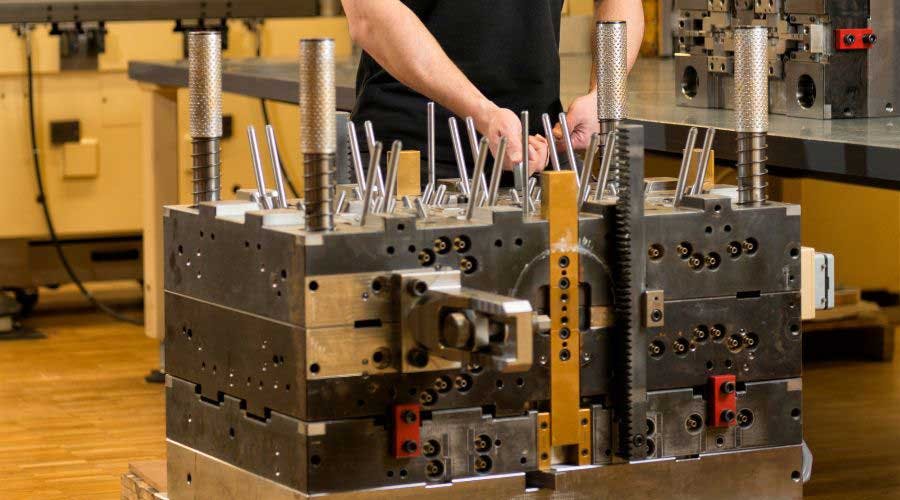
Toolmakers specialise in producing the moulds, dies, jigs and fixtures used to manufacture parts and components across a wide range of industries, including automotive, aerospace, defence, plastics manufacturing and consumer goods.
A toolmaker's daily work can include:
- Operating machines including lathes, milling machines, grinders and CNC equipment to shape metals, plastics and other materials
- Using precision instruments such as micrometers and gauges to measure components to extremely tight tolerances
- Designing and producing moulds and dies used in mass-production manufacturing
- Combining traditional machining techniques with CAD and CAM software
- Assembling tools and testing them to ensure they meet specifications
- Maintaining and repairing existing tooling to prevent disruptions to production
- Diagnosing wear, damage or design faults and recommending modifications
The role demands the kind of accuracy where a fraction of a millimetre can mean the difference between a tool that works and one that doesn't.
How Long is a Toolmaker Apprenticeship?
A toolmaker apprenticeship typically takes four years to complete, in line with other mechanical engineering apprenticeships.
You'll work and earn while learning the trade on the job, alongside studying for your MEM31519 Certificate III in Engineering – Toolmaking Trade at TAFE or a Registered Training Organisation.
Apprenticeship completion is competency-based, so progress depends on demonstrating the required skills and knowledge rather than serving a set period of time.
Toolmaker Salary
A qualified toolmaker in Australia in 2026 typically earns between $70,000 and $90,000 per year, with higher salaries available depending on the industry and the kind of specialist work undertaken. (Seek)
Toolmaker Apprentice Wages
As an apprentice toolmaker, you'll usually be paid under the Manufacturing and Associated Industries and Occupations Award or an EBA provided by your employer. Apprentice wages increase as you progress through the stages of your apprenticeship and gain more practical experience.
Your weekly pay can vary depending on factors such as whether you've completed Year 12, whether you're an adult apprentice, any employer or host benefits, and relevant government support payments.
Indicative weekly Award wages for a toolmaker apprentice as at 1 July 2026, ranging from stage 1 (year 1) to stage 4 (year 4):
- Junior apprentice, did not complete Year 12: $559.55 to $984.81 per week
- Junior apprentice, completed Year 12: $615.51 to $1,029.10 per week
- Adult apprentice (21 years and over): $895.28 to $1,029.10 per week
(Source: Fair Work Ombudsman Pay Guide MA000010)
These figures reflect minimum Award pay rates for manufacturing apprenticeships. Depending on the employer and type of work performed, additional payments such as overtime, tool allowances or site allowances may also apply. Read more in our 2026-27 Apprentice Wages Guide.
Some employers may offer above-Award wages or pay under Enterprise Bargaining Agreements (EBAs), particularly in specialised manufacturing environments.
Skills and Requirements
Toolmaking rewards a particular combination of technical skill, patience and problem-solving:
- Mechanical interest: A genuine curiosity about how mechanical systems and manufacturing processes work
- Manual dexterity: Strong hand-eye coordination and fine motor skills are essential for operating precision machinery
- Attention to detail: The trade demands extreme accuracy in measurement, tolerances and quality of finished work
- Mathematical aptitude: Calculations, geometry and interpreting technical drawings are part of the daily work
- Problem-solving skills: Diagnosing tool faults and finding practical fixes is central to the role
- Communication and time management: Working alongside engineers, designers and machinists, and managing competing priorities, are key to keeping production running
Career Pathways After Your Apprenticeship
A toolmaker qualification opens doors across precision manufacturing and beyond, including:
- Die and mould making for plastics, automotive and consumer goods
- Aerospace, defence and medical device manufacturing
- CNC programming and advanced manufacturing
- Tool design and CAD/CAM specialisation
- Production engineering
- Mechanical engineering (with further study)
- Site supervision, quality control and project management
- Self-employment as a workshop owner or specialist contractor
Many qualified toolmakers use their apprenticeship as a stepping stone, moving into design roles, further study in engineering, or starting their own specialist business within a few years.
Find a Toolmaker Apprenticeship
Get started in a mechanical engineering apprenticeship, like toolmaking, with MIGAS by checking our Jobs Board.
You can also register with us to receive updates when new roles are added.
Latest Apprenticeships
Quick Links
A toolmaking apprenticeship is a specialisation within mechanical trade engineering. You might also consider:
View the MIGAS Jobs Board to view available engineering trade apprenticeships.