From Application to First Day: How MIGAS Annual Intakes Work
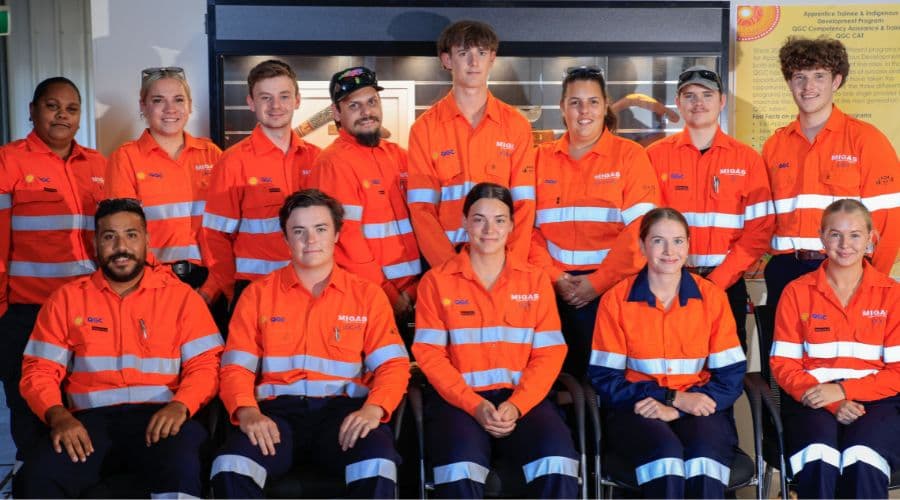
MIGAS 2025 Apprentice Trainee & Indigenous Development Intake with host Shell QGC.
Each year, MIGAS partners with leading Australian companies to run annual apprentice and trainee intakes.
These programs offer local people the chance to start a trade career with a world-class organisation, close to home.
They’re also highly competitive: in some intakes, hundreds of people apply for a handful of spots.
So if you want to give yourself the best chance, it helps to know what the process looks like from start to finish – and what you can do at each stage to stand out.
Here’s exactly what to expect.
Before You Apply: Find the Right Opportunity
Each annual intake has its own dedicated page on the MIGAS website, where you'll find the specific roles on offer, eligibility requirements, and opening and closing dates for applications. Read each listing carefully – the location requirements, trade disciplines on offer, and any specific eligibility criteria are all there.
If you’re not sure which trade is the right fit, spend some time researching before you apply. Look into what a mechanical fitter, electrician, or boilermaker actually does day-to-day. Knowing this will sharpen your cover letter and your answers when you’re interviewed.
Stage 1: Your Application
Your application has two parts: a cover letter and a resume. Both matter.
Your cover letter is your chance to tell us who you are, why you want this apprenticeship or traineeship, and what makes you the right fit.
Keep it honest and specific. Tell us what interests you about the trade, what you do in your community, and why you’re ready to commit. Avoid vague statements like “I’m a hard worker” – show us instead. Take a deep dive into writing a cover letter for an apprenticeship.
Your resume should include your schooling (with subjects and grades), any pre-vocational certificates, and any work experience – paid or volunteer. Include clubs, teams, or community groups you’re involved in. These tell us about how you work with others.
You’ll also need to list two referees. Choose people who know your strengths and can speak to your character – a teacher, a manager, a coach. Give them a heads-up that they may be contacted.
Tip: Re-read your application out loud before you submit it. Does it sound like you? Is every claim honest and specific? If you’ve described yourself as “passionate about the trade”, make sure you’ve actually explained why.
Stage 2: Phone Interview
If your application progresses, you’ll receive a call from the MIGAS Recruitment Team. This initial phone interview is a chance for us to discuss the details of your application and clarify any questions upfront.
Be somewhere quiet when you take the call. Have your application in front of you so you can speak to it clearly. Listen carefully and answer directly – this is also your first opportunity to ask any questions you have about the role or the program.
See more tips and some example apprenticeship interview questions.
Candidates who progress from Stage 1 will be invited to a more formal interview, and arrangements will be made to confirm a time.
Stage 3: Formal Interview and Skills Testing
The formal interview is conducted by a MIGAS Recruitment Specialist, online or by phone. This is a more in-depth conversation assessing your suitability for the program.
At this stage, you’ll also be asked to complete online skills testing and reference checking. The skills tests evaluate your literacy and numeracy – they don’t need to be perfect, but they do need to be your own work.
The big thing our recruiters are looking for at interview is motivation. An Australian Apprenticeship is typically a four-year commitment, and the first year can be tough – entry-level work, lower wages, a lot to learn. The candidates who complete their trade are the ones who genuinely want to be there.
Before your interview, think carefully about what’s really driving you. Whether it’s a love of working with your hands, a goal to eventually run your own business, or an interest in a specific industry – know it, believe it, and say it clearly. People with a genuine passion talk about it easily. That’s what our recruiters are listening for.
Stage 4: Assessment Centre
Shortlisted candidates for intake programs are invited to attend a face-to-face assessment centre – a facilitated group workshop where you’ll complete a series of activities alongside other applicants while the MIGAS team observes.
The day typically includes an introduction and ice breaker, group activities, individual exercises, aptitude testing, and practical tasks relevant to the trade discipline.
Our recruiters are looking for practical ability, teamwork, communication skills, and genuine motivation.
Stage 5: Pre-Employment Medical
Pre-selected candidates will be asked to complete a pre-employment medical assessment before final offers are made. MIGAS organises and covers the cost of the medical, and you’ll be advised on how and where to complete it.
This is standard practice across trade programs. Be honest during the assessment – it’s there to make sure you’re fit and safe to work in the role, not to catch you out.
Stage 6: Employment Offer
If you’re successful, you’ll receive a verbal offer first – a phone call from the team to let you know you’ve got the position. This is followed by your formal employment contract and all new starter information via email.
Read your contract carefully before you sign. If you have questions, ask them. From here, your MIGAS Field Officer will be in touch to guide you through inductions, any required tickets or pre-start training, and everything you need to know before your first day.
If You Don’t Make it This Time
Competition for MIGAS intake programs is real, and not every applicant who deserves a place will get one in a given intake. If you’re unsuccessful, that’s not the end of the road.
Use the time between intakes to strengthen your application: pick up relevant work experience, complete pre-vocational study, or get more involved in your community. When the next intake opens, you’ll be a stronger candidate for it.
Keep an eye on the MIGAS Jobs Board – new opportunities come up regularly across different states and trade disciplines.
The Process at a Glance
- Application (cover letter and resume)
- Phone interview
- Formal interview and online skills testing
- Assessment centre (face-to-face)
- Pre-employment medical
- Employment offer
Ready to start? Browse current apprenticeship and traineeship opportunities on our Jobs Board and register your details today.
Upcoming MIGAS Intakes
Explore our upcoming apprentice and trainee intakes and find the right opportunity for you:
Bengalla Apprentice Intake - Upper Hunter, NSW
Origin Energy - Western Downs, QLD
Shell QGC - Western Downs and Gladstone, QLD