Why You’re Not Getting an Apprenticeship (and What to Do About It)
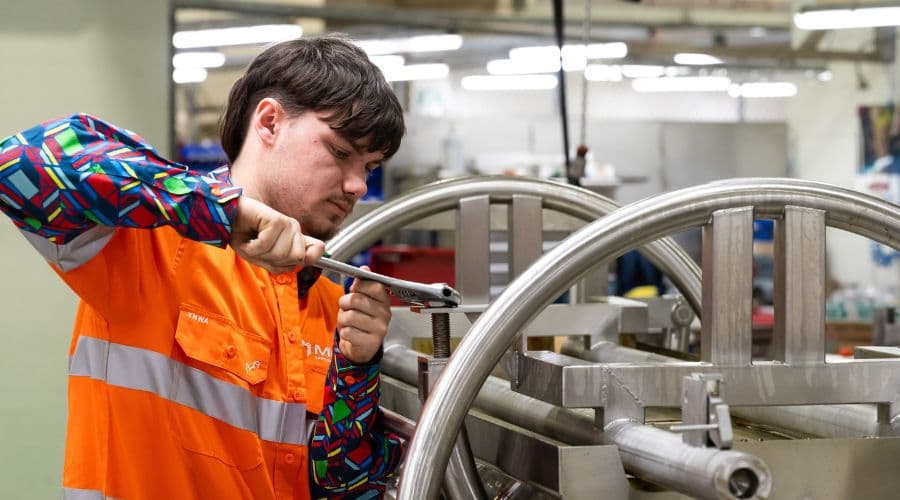
MIGAS Fitter and Turner Apprentice, Kayden, undertaking his on-the-job training with host company Arnott's.
If you’ve put in a stack of apprenticeship applications and haven't landed a role yet, you’re not alone.
Apprenticeship recruitment is competitive, especially for the popular trades, and plenty of capable people miss out for reasons that aren’t always obvious. Some of those reasons are within your control and some aren’t.
Working out which is which is the quickest way to start getting better results.
Some Roles Attract Hundreds of Applicants
Trade apprenticeships are popular, and the best ones get a lot of applications. Electrical apprenticeships in particular often attract hundreds of applicants per role, especially for large, well-known employers.
Mobile plant mechanic, air conditioning and refrigeration, and carpentry roles can be just as hard to crack depending on where you are and who’s hiring.
If you’re only chasing the most sought-after trades or the big-name employers, you’re up against a much larger field. There’s no reason to avoid those roles. Just go in knowing each application is one of many, and that the people who get through are the ones who put real effort into every one.
Make Sure You’re Applying for Roles That Fit You
This one is worth an honest look. Some roles are advertised with specific requirements that you either meet or you don’t.
- Age and experience level: Some employers want a junior apprentice straight out of school, others want a mature age candidate with workforce experience, and that preference is rarely spelled out in the ad. Sometimes you won’t get the role and it won’t be about you at all, just about what the employer had in mind. The best you can do is put a strong application forward and lead with what you bring.
- Location: If a role specifies a particular local government area or a set radius from site, that requirement is usually firm. Applying from outside the area, even if you’re willing to travel, may not get traction. Some employers prefer candidates who already live locally, particularly when early starts or shift work are involved. Read more about why location matters when applying for an apprenticeship.
- Licence and ticket requirements: Some apprenticeships need a driver’s licence, a White Card, or other tickets before you can start. If a role lists these and you don’t have them, address it head-on rather than hoping nobody notices.
Putting your energy into roles that match your situation beats applying for everything and getting filtered out at screening.
How to Stand Out in an Apprenticeship Application
This is the single biggest fixable issue. A lot of candidates fire off dozens of applications using fast-apply or one-click options on the big job sites, with the same generic resume and either no cover letter or one that doesn’t mention the role.
Recruiters and employers spot a fast-apply submission straight away. Five tailored applications will usually beat 50 generic ones.
Tailor your resume to the role
You don’t need to rewrite your apprenticeship resume from scratch every time, but you do need to adjust it for each role.
Read the ad carefully. Notice the language they use, the skills they prioritise, the trade they’re hiring for, and the kind of work they describe. Then make sure your resume reflects those things where it honestly can.
If the ad emphasises mechanical aptitude, lead with the experience that shows it. If they mention working in teams, highlight any team-based work you’ve done, even if it’s casual or volunteer. If they value reliability, show a consistent work history rather than gaps you haven’t explained.
If you don’t have much paid work experience, that’s not a deal-breaker. Include school projects, volunteer work, sport, or hobbies that show practical skills, along with anything you’ve done alongside family members in the trade. Show that you can turn up, take direction and follow through.
Employers also value candidates who tinker, build, repair, or make things in their spare time. Restoring a motorbike, working on cars, building furniture, 3D printing, electronics projects, helping with renovations, all of it can demonstrate aptitude and enthusiasm for a trade.
Write a real cover letter
An apprenticeship cover letter doesn’t need to be long. Half a page is plenty.
What it needs to do is answer three questions:
- Why this trade? Not “any trade”, this specific one
- Why this employer? Have you researched them? Do you know what they do? Is there something specific that drew you to applying?
- Why you? What do you bring, and what makes you a sensible bet for a four-year apprenticeship?
If your cover letter could be sent to any employer for any apprenticeship, it isn’t doing its job. A generic cover letter signals that you’ve put no real thought into this role, and employers could read that as a sign you’ll put no real effort into the work.
A note on AI tools
There’s nothing wrong with using ChatGPT, Claude, or similar tools to help you draft a cover letter. They can be useful, especially if writing isn’t your strong suit.
The problem comes when candidates copy and paste the output without making it sound like themselves. Recruiters often pick AI-generated cover letters because they lean on similar phrasing and generic examples.
If you’re going to use these tools, treat them as a starting point. Read what they produce, cut anything that doesn’t sound like you, add specifics about your own experience and the actual employer, and rewrite anything that feels generic.
What you want is a letter that sounds like you and makes your reasons for applying clear.
Research the employer before you apply
Look at their website, LinkedIn or Facebook page. Get a sense of what they do, where they work, the projects they take on, and the values they talk about.
Five minutes of research gives you something specific to mention in your cover letter and something useful to say if you get a phone screen.
It also tells you whether the employer is a good fit for you. An apprenticeship is four years so it’s worth knowing who you’re signing up with.
Be Ready for the Phone Call
Most apprentice recruitment processes include a phone screen at some point. It might come from the employer directly, from a Group Training Organisation (GTO), or from a recruitment agency. It’s often short, sometimes only 10 or 15 minutes, but it’s where a lot of applications get sorted.
What recruiters are listening for:
- Genuine enthusiasm for the trade
- That you know what you applied for and why
- That you can hold a conversation, follow questions, and answer thoughtfully
- That you’ve thought about what an apprenticeship involves: the early starts, the physical work, the four-year commitment
If phone calls make you nervous, that’s normal. Practise with a friend or a family member before you start applying. Run through the likely questions out loud like why this trade, why this employer, why you, what you know about the role, when you can start.
Saying the answers out loud is very different from thinking about them, and the practice pays off when a real call comes through.
When the call does come, take it somewhere quiet. Have a notepad and pen ready, and your resume in front of you if you can. If now isn’t a good time, ask politely if you can call back in ten minutes, then do.
Get Some Practical Experience if You Can
One of the strongest things you can do, especially if you don’t have trade experience yet, is get some real exposure to the work before you apply.
A few options worth considering:
- If you’re still at school: Talk to your guidance counsellor or careers adviser about school-based apprenticeship options or work experience placements. These give you a real taste of the trade and they look excellent on a future application.
- Pre-apprenticeship courses: These are short courses, usually 6 to 12 weeks, that introduce the basics of a trade. Completing one shows employers you’re serious, gives you some baseline skills, and helps you confirm whether the trade suits you before you commit to four years.
- Casual or labouring work in your target industry: Working as a labourer, trades assistant, or offsider on construction sites, in workshops, or in industrial settings gives you site experience and shows you can handle the work. Employers value candidates who’ve already done physical work in similar environments.
- Help out a tradie you know: If you have family or friends in the trade, ask if you can spend a few weekends or school holidays alongside them. It gives you something real to talk about in interviews, and it tells you whether you actually like the work.
All of these signal commitment, which is one of the things employers care about most. Apprenticeships are expensive to run, and employers want apprentices who’ll stick with it for the full four years.
Where to Find Apprenticeship Roles
Most candidates default to the general job boards and stop there. A few more channels are worth knowing about:
General job boards: This is the obvious starting point, and they list plenty of apprentice roles. SEEK and Indeed are some of the main ones.
Group Training Organisation websites: GTOs employ apprentices and place them with host employers. They run their own job boards and application processes, and there are both local and sector-specific ones. Search for GTOs operating in your area or trade and check their vacancies directly. The MIGAS Jobs Board is one of these.
Apprentice Connect Australia Providers: These government-funded organisations support apprentices and employers throughout an apprenticeship. Most candidates haven’t heard of ACAPs, but they often have job listings and local connections that may not show up on the general boards.
Direct to employer: Larger employers in mining, resources, and construction often run their own apprentice intakes once or twice a year. Their websites usually have a careers section with intake dates and application details. There’s less competition here than on public job boards, though it takes more research to find.
Spend the time to find out what’s available where you are. The apprenticeship that’s right for you might not be the one being advertised most loudly.
Focus on What You Can Control
Landing an apprenticeship can take time, particularly for competitive trades or specific employers. A handful of rejections doesn’t mean the door is closed. More often it means the approach needs a tweak.
Timelines vary too. Some employers move within days, others take weeks to work through applications and line up interviews. Silence in the first week or two rarely means a no.
If you’ve been at it for a while without much luck, the most useful thing you can do is put your energy into the parts you control: the quality of each application, the roles you choose to chase, and how ready you are when the phone rings.
Do that consistently and you shift the odds in your favour, even when the market is tight.
Apprenticeship Application FAQs
- Why do I keep getting rejected from apprenticeships?
Usually it comes down to competition and generic applications. Popular trades and well-known employers draw a lot of applicants, so a resume and cover letter that aren’t tailored to the role tend to get filtered out early.
Targeting roles that fit your situation, and tailoring each application, makes the biggest difference.
- How many apprenticeship applications should I send?
Quality matters more than quantity here. A few carefully tailored applications, sent to roles you’ve researched, will usually beat a stack of generic fast-apply submissions.
- Do I need experience to get an apprenticeship?
No. Most apprenticeships are designed for people starting out.
Any practical exposure helps though, whether it’s a pre-apprenticeship course, labouring or trades-assistant work, a school-based placement, or time spent alongside someone already in the trade.
It also helps you know if the trade is right for you, before committing to four years of training in an apprenticeship.
- How long does it take to get an apprenticeship?
It varies. Some employers run intakes only once or twice a year, and individual recruitment processes can take anywhere from a few days to several weeks. Not hearing back straight away doesn’t mean you’ve missed out.
There are plenty of apprenticeship roles advertised throughout the year, so subscribe where you can for updates.
- Can I get an apprenticeship as a mature age candidate?
Yes. There’s no upper age limit on apprenticeships in Australia, and people start in their late 20s, 30s and beyond every year. The thing to be aware of is that mature age apprentices are paid the adult rate, which costs an employer more than a school leaver on a junior rate, so some roles pitched at younger candidates are harder to land.
The employers who do take on mature age apprentices, often in mining, resources, defence and larger industrial businesses, tend to value the reliability and work history that come with a few years in the workforce. Lead with that track record in your application instead of competing on potential.
Our guide to mature age apprenticeships in Australia walks through the wages, the 2026 incentive changes, and the realities in more detail.