What Kinds of Mechanical Engineering Apprenticeships Are There?
Mechanical engineering apprenticeships are trade apprenticeships focused on the manufacturing, installation, maintenance and repair of machinery and mechanical components. In Australia, the main mechanical engineering trade specialisations are the Mechanical Fitter, Fitter and Turner, Fitter Machinist and Toolmaker apprenticeships. All four lead to a Certificate III in Engineering - Mechanical Trade and typically take four years to complete.
What is a Mechanical Engineering Apprenticeship?
Mechanical engineering trade apprenticeships sit within the broader Engineering apprenticeship category and are primarily focused on fixed plant machinery, which refers to industrial equipment and machinery that is permanently installed in a specific location rather than moved between sites.
These trades are found across a wide range of industries including mining and resources, manufacturing, oil and gas, green and clean energy, defence and transport. Mechanical engineering tradespeople are responsible for installing, maintaining, troubleshooting and repairing the machinery and equipment that keeps these industries operating.
All mechanical engineering apprenticeships are four years in duration, combining on-the-job training under the supervision of qualified tradespeople with off-the-job study at a Registered Training Organisation. They are covered by the Manufacturing and Engineering Training Package (MEM) and lead to a Certificate III in Engineering - Mechanical Trade in the relevant specialisation.
Mechanical Engineering Trade Specialisations
Mechanical Fitter Apprenticeship
A Mechanical Fitter assembles, installs, maintains and repairs mechanical equipment and machinery. This is one of the most versatile engineering trades, with mechanical fitters working across a wide range of industries and environments, from mine sites and processing plants to manufacturing facilities and power stations.
Day-to-day work involves reading and interpreting technical drawings and specifications, using precision measuring instruments, fitting and aligning mechanical components, and diagnosing and rectifying faults in mechanical systems. Mechanical fitters work with a broad range of equipment and are valued for their ability to problem-solve and keep complex machinery running.
Read more about a Mechanical Fitter Apprenticeship
Fitter and Turner Apprenticeship
A Fitter and Turner combines the skills of fitting with the ability to use lathes and other machine tools to manufacture or modify precision components. This specialisation has a stronger manufacturing focus than a straight mechanical fitter role, with significant emphasis on machining skills and the production of parts to precise tolerances.
Fitter and Turners work in manufacturing, engineering workshops, mining, defence and a range of other industries where precision component production and modification is required. The trade demands a high degree of accuracy and attention to detail.
Read more about a Fitter and Turner Apprenticeship
Fitter Machinist Apprenticeship
A Fitter Machinist specialises in the operation of machining equipment to produce or modify mechanical components. The focus is primarily on the machining side of the trade, including the operation of mills, lathes, grinders and CNC machinery to manufacture parts to specification.
This specialisation suits people who are drawn to precision manufacturing and enjoy working with advanced machining technology. CNC machining, in particular, is a growing area with strong demand across manufacturing, aerospace, defence and advanced engineering sectors.
Read more about a Fitter Machinist Apprenticeship
Toolmaker Apprenticeship
A Toolmaker designs, manufactures and maintains the tools, dies, jigs, fixtures and moulds used in manufacturing processes. This is one of the most specialised and technically demanding of the mechanical engineering trades, requiring a high level of precision, problem-solving ability and understanding of manufacturing processes.
Toolmakers are found primarily in manufacturing industries, particularly in sectors such as automotive components, plastics, metal fabrication and precision engineering. The trade involves working to extremely tight tolerances and requires both strong machining skills and a thorough understanding of materials and manufacturing techniques.
Read more about a Toolmaker Apprenticeship
What Skills Do Mechanical Engineering Apprentices Develop?
Across all four specialisations, mechanical engineering apprentices develop a core set of skills and knowledge that includes:
- Reading and interpreting engineering drawings, specifications and technical documents
- Using precision measuring instruments and inspection equipment
- Operating a range of hand tools, power tools and machine tools
- Applying workplace health and safety procedures, including working safely with high-powered equipment
- Understanding materials, their properties and appropriate applications
- Diagnosing faults and developing solutions to mechanical problems
- Working with CNC equipment and other advanced manufacturing technology
Attention to detail is a fundamental requirement across all mechanical engineering trades. You will regularly be working to precise tolerances where small errors can have significant consequences.
The ability to work methodically, follow technical documentation accurately and apply sound judgement is as important as physical aptitude.
Where Do Mechanical Engineering Tradespeople Work?
The mechanical engineering trades are among the most broadly applicable in Australia. Qualified mechanical engineering tradespeople work across:
- Mining and resources, including open cut and underground operations, processing plants and FIFO roles
- Oil and gas, including onshore and offshore facilities
- Manufacturing, including food processing, automotive, defence and industrial production
- Green and clean energy, including wind, solar and hydrogen infrastructure
- Power generation and utilities
- Defence and aerospace
- Transport and logistics infrastructure
The portability of the qualification and the broad applicability of the skills mean that qualified mechanical engineering tradespeople have significant flexibility in the industries and locations they can work in throughout their career.
Is a Mechanical Engineering Apprenticeship Right for You?
Mechanical engineering apprenticeships suit people who are drawn to hands-on problem-solving, enjoy working with machinery and technical equipment, and have the patience and attention to detail that precision work requires. If you are the kind of person who likes to understand how things work and takes satisfaction in keeping complex systems running or manufacturing components to an exact specification, these trades are worth serious consideration.
Prior study in mathematics, physics, engineering or metalwork at school is an advantage, as is any prior exposure to workshop or mechanical environments, but neither is a requirement. MIGAS will assess your aptitude and suitability through the recruitment process.
Browse current mechanical engineering apprenticeship opportunities on the MIGAS Jobs Board, or register your details and we will be in touch when a suitable role becomes available in your area.
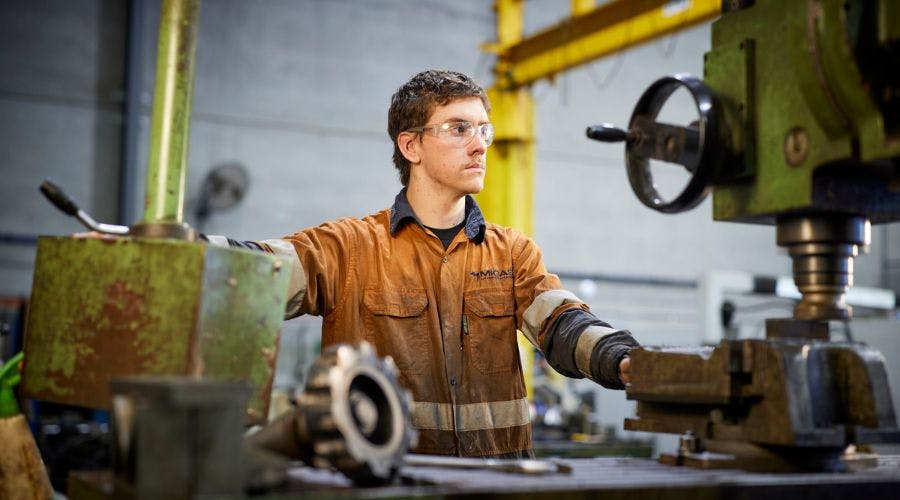
MIGAS Fitter Machinist Apprentice, Ben, is completing a Certificate III in Engineering - Mechanical Trade as part of his training.